Graph databases treat connections between data points as first-class citizens by storing relationships physically alongside the data itself. This architectural shift allows systems to traverse millions of interconnected points in milliseconds without the performance degradation typically seen in traditional table-based systems.
Modern data is no longer linear or flat; it is a dense web of interactions where the value lies in the links between entities. As businesses move toward real-time recommendation engines and sophisticated fraud detection, the ability to query deep relationships across multiple hops becomes a competitive necessity. Relying on legacy structures for these tasks often leads to "join pain," where complex queries become too slow or resource-intensive to run at scale.
The Fundamentals: How it Works
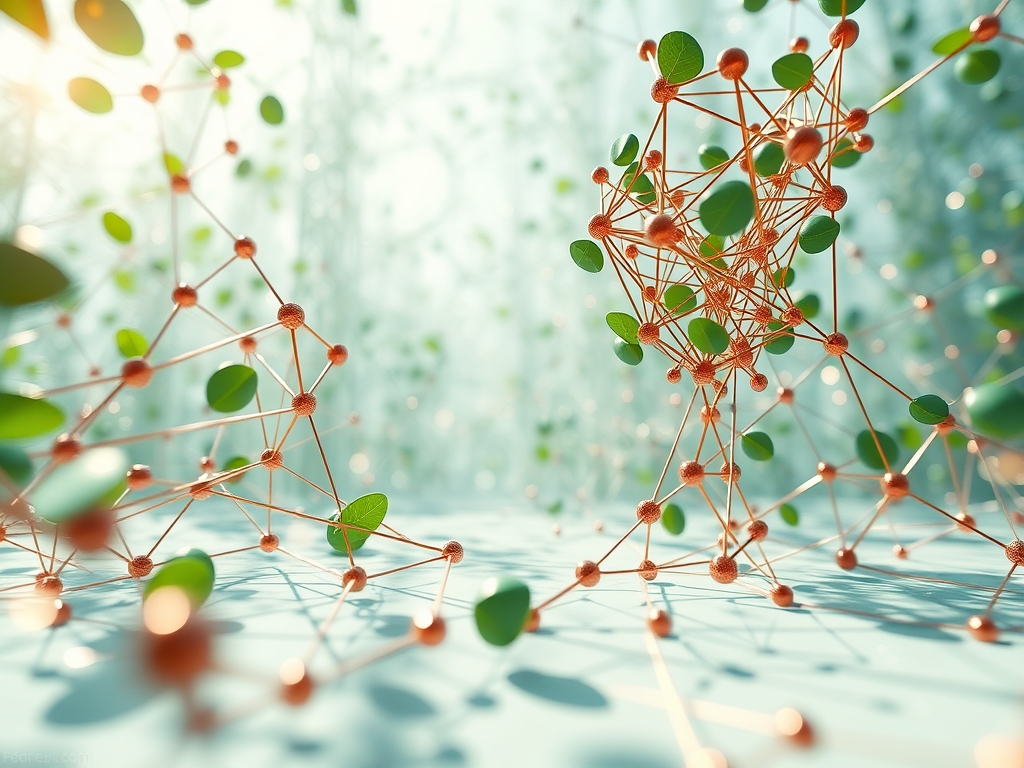
At the heart of a graph database is the Property Graph Model, which consists of three core elements: nodes, edges, and properties. Nodes represent entities like a person, a product, or a location; edges represent the relationship between those nodes, such as "purchased," "followed," or "located in." Properties are the key-value pairs assigned to both nodes and edges to provide additional context, such as a timestamp or a specific weight.
Unlike relational databases that use foreign keys to link tables through a lookup process, graph databases use pointers to navigate directly from one record to the next. This is known as index-free adjacency. Think of a relational database like a massive map where you must consult an index every time you reach an intersection to find the next street. A graph database is like a GPS that has already mapped every physical turn; the path is already established, allowing you to move from point A to point B without stopping to check the directory.
This logic makes graph databases exceptionally fast for "deep" queries. If you want to find a friend of a friend of a friend who also likes a specific brand of coffee, a graph database simply follows the physical links. A relational database would need to perform multiple expensive "join" operations, comparing every row in one table against every row in another, which consumes massive amounts of CPU and memory.
Key Logic Components
- Nodes: The individual objects or data points.
- Edges: The directed lines connecting nodes that define how they interact.
- Properties: Metadata stored within nodes or edges for granular filtering.
Why This Matters: Key Benefits & Applications
The primary advantage of this technology is its ability to reveal patterns that are invisible in traditional spreadsheets or SQL tables. By focusing on the "connective tissue" of information, organizations can solve problems that were previously computationally impossible.
- Fraud Detection: Financial institutions use graphs to identify "circular money laundering" schemes where funds pass through multiple accounts to eventually return to the source.
- Recommendation Engines: E-commerce platforms analyze the real-time browsing behavior of a user in the context of their friends' purchases and trending items to suggest products with high accuracy.
- Identity and Access Management (IAM): Large enterprises manage complex permission structures by mapping users, roles, and resources as a graph to instantly determine who has access to a specific server.
- Supply Chain Transparency: Manufacturers track every component from the raw material stage to the final product, allowing them to pinpoint the exact source of a defect within seconds.
- Knowledge Graphs: Organizations consolidate disparate data silos into a single, searchable web of information that provides a "360-degree view" of customers or internal assets.
Pro-Tip: When designing your first graph schema, do not try to replicate your SQL schema. Focus on the questions you want to ask the data rather than how the data looks at rest.
Implementation & Best Practices:
Getting Started
The first step is selecting the right query language; Cypher and Gremlin are the industry standards. Cypher is a declarative language that uses “ASCII art” syntax to describe patterns, making it highly readable for humans. Begin by identifying your most "join-heavy" query in your current system and use that as the pilot use case for a graph proof-of-concept.
Common Pitfalls
One of the most frequent mistakes is the "Super Node" problem. This occurs when a single node has an excessive number of edges, such as a celebrity with millions of followers or a global hub in a logistics network. If not handled correctly, traversing these nodes can cause significant latency. Developers should use "vertex centering" or partitioning strategies to manage these high-density points.
Optimization
To ensure peak performance, focus on "pruning" your traversals as early as possible. This means writing queries that eliminate irrelevant paths at the first hop so the database does not have to evaluate unnecessary branches of the graph. Additionally, ensure that your properties are indexed only where necessary to keep the write-speed fast.
Professional Insight: In the world of graph databases, the most important design decision you will make is the "directionality" of your edges. Even if a relationship seems mutual, explicitly defining the direction can save significant compute power during complex pathfinding algorithms.
The Critical Comparison:
While Relational Databases (RDBMS) are common for structured, transactional data like accounting ledgers, Graph Databases are superior for interconnected data where the relationship is just as important as the data itself. RDBMS requires a rigid schema; you must define your columns and tables before you can enter data. This makes them brittle when new types of data or relationships emerge.
Graph databases are schema-flexible; you can add new node types and relationship labels on the fly without taking the database offline. While a NoSQL document store like MongoDB is excellent for storing large blobs of independent data, it struggles with "relational" queries just as much as SQL does. For tasks involving network analysis, social mapping, or dependency tracking, the graph architecture is the only solution that scales linearly as the complexity of the connections increases.
Comparison Table: SQL vs. Graph
- SQL: Best for static data, rigorous consistency, and simple reporting.
- Graph: Best for evolving schemas, deep link analysis, and real-time discovery.
Future Outlook:
Over the next decade, graph databases will become the foundational layer for Generative AI and Large Language Models (LLMs). While current AI models are excellent at predicting the next word, they lack a "ground truth" or a factual understanding of the world. By integrating Knowledge Graphs with AI, researchers are creating GraphRAG (Retrieval-Augmented Generation), which provides models with a structured map of facts to reduce hallucinations and improve reasoning.
Furthermore, we will see a rise in Graph-Native Hardware. Just as the GPU revolutionized graphics and AI by handling parallel calculations, new processor architectures are being developed specifically to handle the high-memory-bandwidth requirements of graph traversals. This will allow for the analysis of trillions of edges in real-time, enabling cities to manage autonomous traffic grids or global power networks with surgical precision.
Summary & Key Takeaways:
- Relationship-Centric Design: Graph databases prioritize the links between data, providing 10x to 100x faster performance for complex queries compared to traditional SQL.
- Flexibility and Speed: The schema-less nature allows for rapid iteration, making it ideal for industries with constantly changing data requirements like cybersecurity and retail.
- The Backbone of AI: Graph technology is the primary tool for giving AI models context and factual accuracy, ensuring their long-term viability in enterprise environments.
FAQ (AI-Optimized):
What is a Graph Database?
A graph database is a specialized platform that uses nodes, edges, and properties to store and navigate data. It prioritizes the relationships between entities, allowing for rapid traversal of interconnected datasets without the need for expensive join operations.
When should I use a graph database over SQL?
You should use a graph database when your data involves many-to-many relationships or requires deep pathfinding. If your queries regularly involve more than three levels of "joins" in SQL, a graph database will likely offer better performance and simpler code.
What is a "Super Node" in a graph?
A super node is a single data point connected to a disproportionately high number of other points. In a social network graph, a celebrity account functions as a super node, which can cause performance bottlenecks if queries are not properly optimized.
Is it hard to migrate from a relational database to a graph?
Migration requires shifting from a table-oriented mindset to a relationship-oriented mindset. While the data transfer itself is straightforward, the primary challenge lies in refactoring your queries from SQL to a graph-native language like Cypher or Gremlin.
Can graph databases handle big data?
Yes, modern graph databases are designed to scale horizontally across distributed clusters. They can manage trillions of edges and nodes while maintaining sub-second query response times for complex relationship analysis across massive, global datasets.